How to lower LDL cholesterol
High LDL cholesterol ("bad" cholesterol) is one of the most modifiable cardiovascular risk factors — diet and lifestyle genuinely move it, and medication moves it further when needed. Here's an evidence-based rundown of what actually lowers LDL, by how much, how fast, and why the trend over time is what proves it's working.
Quick reference: for LDL's typical range at a glance, see LDL cholesterol in our blood test results library.
This is general educational information, not medical advice. Cholesterol management — especially whether you need medication — is a decision to make with a clinician.
What LDL is and why it matters
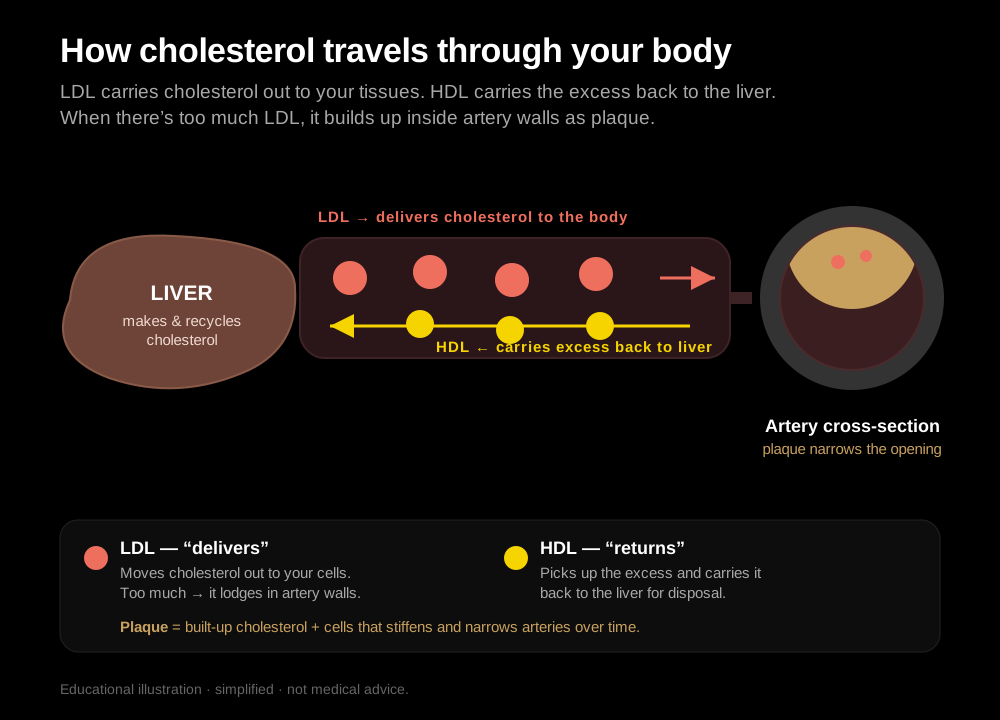
LDL (low-density lipoprotein) is one of the particles that carries cholesterol through your bloodstream. Cholesterol itself is essential — your body uses it to build cell membranes and hormones — but when there's too much LDL in circulation, some of it lodges in artery walls. Over years, that cholesterol accumulates into plaque, a process called atherosclerosis. Plaque narrows arteries and can rupture, and that is the underlying mechanism behind most heart attacks and many strokes.
This is why LDL is a headline number on every lipid panel. The relationship between LDL and cardiovascular risk is one of the most consistent findings in preventive medicine: broadly, the more LDL you carry over time and the longer you carry it, the more your risk climbs — and lowering it lowers that risk. Crucially, it's a cumulative exposure. High LDL rarely causes symptoms, so a decade of quietly elevated numbers does its damage silently. That's the whole argument for paying attention early rather than waiting for a problem to announce itself.
Your LDL target depends on your risk, not a single number
A common misconception is that there's one "normal" LDL everyone should hit. In reality, the right target depends on your overall cardiovascular risk. Someone who has already had a heart attack, or who has diabetes or established heart disease, is typically aimed at a much lower LDL than a young person with no other risk factors. The generic range printed on your lab report is a population reference, not a personalized goal.
Your clinician arrives at your target by weighing the whole picture: age, blood pressure, smoking status, diabetes, family history, HDL, triglycerides, and sometimes formal risk calculators. That's why two people with the identical LDL number can get very different advice — one told to simply keep an eye on it, the other advised to lower it aggressively. Interpreting your LDL in isolation, without that context, is the single most common mistake people make when reading their own results. If you want a broader primer on reading a lipid panel, see what HDL, LDL, TSH and CBC mean. To see how your LDL is estimated from the rest of your panel, our LDL cholesterol calculator shows both the Friedewald and Sampson methods.
The diet levers, biggest first
Diet is where most people have the most leverage, and not all changes are equal. Here they are in rough order of impact.
- Cut saturated and trans fats. This is the single biggest dietary lever. Saturated fat — the kind concentrated in butter, fatty and processed meats, full-fat dairy, and many fried and baked goods — tends to raise LDL. The move is to replace it, not just remove it: swap toward unsaturated fats such as olive oil, nuts, seeds, avocado, and oily fish. Trans fats (from partially hydrogenated oils) are the worst offenders for LDL and are best avoided entirely; they've been removed from many food supplies but can still appear in some processed products.
- Add soluble fiber. Oats, beans, lentils, barley, apples, citrus, and especially psyllium contain soluble fiber that binds cholesterol and bile acids in the gut so they're carried out rather than reabsorbed. The effect is real but depends on doing it consistently — think of it as a daily habit, not an occasional bowl of oatmeal.
- Plant sterols and stanols. Found naturally in plants and added to some fortified spreads, yogurts, and supplements, these compounds modestly lower LDL by blocking cholesterol absorption. They're a supporting player, not a foundation, but they add up alongside the bigger levers.
- Reduce refined carbohydrates and added sugar. These don't drive LDL as directly as saturated fat does, but they push triglycerides up and HDL down, worsening the overall picture — and diets heavy in refined starches and sugar tend to crowd out the fiber-rich foods that help. This matters more if your triglycerides are already elevated; see what high triglycerides mean.
- Lean more toward whole plants overall. Beyond any single food, a mostly-plant, fiber-rich eating pattern — plenty of vegetables, legumes, whole grains, nuts, and fruit — reliably supports a better lipid profile. Dietary patterns matter more than any one "superfood."
For most people, sustained dietary change lowers LDL by roughly 10–20%. That's meaningful, but the range is wide because response varies a lot between individuals, partly for genetic reasons.
The dietary cholesterol myth
For decades the advice was to avoid cholesterol-rich foods like eggs and shrimp. The science has shifted: for most people, the saturated and trans fat in the diet raises blood LDL more than the cholesterol content of food does. Your liver makes most of your cholesterol and adjusts production based on what you eat, which blunts the effect of dietary cholesterol for many people.
This is why modern guidance emphasizes fat type — less saturated, more unsaturated, plus more fiber — rather than simply counting cholesterol milligrams. There are exceptions: some people are "hyper-responders" whose LDL climbs more with dietary cholesterol, so this isn't a green light to ignore it entirely. But the practical headline is that swapping butter for olive oil moves your LDL more than swearing off eggs.
The lifestyle levers
Diet does the heavy lifting on LDL, but several other habits shape the full cardiovascular picture and are worth treating as non-negotiable.
- Lose excess weight. Even modest weight loss can improve LDL and, often more noticeably, lower triglycerides and raise HDL. You don't need a dramatic transformation for the lipid panel to respond.
- Exercise regularly. Aerobic activity's most reliable lipid effects are raising protective HDL and lowering triglycerides; its direct effect on LDL is usually modest. Don't be discouraged if LDL barely moves from exercise alone — it's still one of the strongest habits for heart health overall, and it amplifies the benefit of dietary change.
- Don't smoke. Smoking worsens the lipid profile and damages artery walls, compounding the harm from any given LDL level. Quitting improves cholesterol and cuts cardiovascular risk broadly, often faster than people expect.
- Keep alcohol moderate. Heavy drinking pushes triglycerides up and stresses the liver, dragging down the overall picture. There's no lipid benefit worth chasing here; the sensible move is moderation, and less is generally better.
None of these replaces the dietary levers, but together they determine whether your LDL sits in a healthy, stable metabolic context or a fragile one.
When lifestyle isn't enough
Be realistic about the ceiling. If your LDL is very high, or you're at high cardiovascular risk, or you have familial hypercholesterolemia — an inherited condition that keeps LDL elevated from a young age regardless of diet — lifestyle changes alone often can't get you to target. This isn't a failure of willpower; it's biology. Some people simply produce or clear cholesterol in a way that food and exercise can only partly offset.
That's when medication enters the conversation. Statins are the most established and lower LDL substantially, and there are other options — such as ezetimibe or newer injectable drugs — that a clinician may add or use when statins aren't tolerated or aren't enough. The decision to start medication isn't triggered by a single number in isolation; it comes from weighing your overall risk. That's precisely why "should I take a statin?" is a question for your doctor, not for a blog or a lab reference range. If you do start medication, it works alongside diet and lifestyle rather than replacing them — the habits keep the dose lower and the whole picture healthier.
How fast LDL responds, and why retesting matters
Cholesterol doesn't change overnight. Dietary changes typically take about 4–12 weeks to show up in your blood, which is why a clinician usually rechecks your panel a few months after you change your diet, lose weight, or start a medication — not a few days later. A single reading, taken at one moment, simply can't tell you whether what you're doing is working.
The trend across repeat tests can. Watching LDL fall from one panel to the next — ideally alongside your weight, your activity, and your other lipid markers — is the feedback loop that turns "I think this is helping" into evidence. It also catches the opposite: a change that looked promising but isn't actually moving the number, so you can adjust rather than coast. Reading each result in the context of the ones before it is the core skill here; see how to read your blood test results and tracking lab results over time. For how often to test in the first place, see how often you should get blood work.
ApoB and non-HDL: the complementary numbers
LDL is the headline, but it isn't the whole story of your particle-related risk. Two other numbers add useful context:
- Non-HDL cholesterol is simply your total cholesterol minus your HDL. It captures cholesterol in all the potentially harmful particles, not just LDL, and it appears on many standard panels at no extra cost. It can be especially informative when triglycerides are elevated, a situation where LDL alone can understate risk. You can see how it's defined in our non-HDL cholesterol reference.
- ApoB (apolipoprotein B) is a separate blood test that counts the actual number of atherogenic particles, since each of these particles carries one ApoB molecule. Two people can have the same LDL but different particle counts, and the one with more particles generally carries more risk. ApoB isn't on every routine panel, so it's worth asking your clinician whether measuring it would add anything for you.
You don't need to fixate on these — LDL remains the primary lever most guidance is built around — but knowing they exist helps you understand why a clinician might look beyond your LDL number, particularly if your triglycerides run high. It also underscores the same theme: no single marker is the full picture. HDL and triglycerides round it out; what HDL, LDL, TSH and CBC mean puts them side by side.
Putting it together
Lowering LDL isn't one dramatic intervention; it's a stack of moderate ones that compound. Shift the fats in your diet, make soluble fiber a daily habit, lean toward whole plants, lose excess weight if you're carrying it, stay active, don't smoke, keep alcohol moderate — and, when your risk warrants it, use medication as a tool rather than treating it as defeat. Then give it time and measure, because the number moving in the right direction across repeat tests is the only real proof that any of it is working.
That's exactly what Quanome is built for — it reads each lipid panel on your device, charts LDL against its range over time, and an AI coach explains the trend alongside your other markers. For more on understanding your panels, browse the rest of the Quanome blog.
Track your LDL trend, privately
Quanome charts your LDL and other lab markers over time on your device, so you can see whether changes are working. Learn more about Quanome →


Frequently asked questions
What's the fastest way to lower LDL cholesterol?
The biggest dietary levers are cutting saturated and trans fats and adding soluble fiber (oats, beans, psyllium). Combined with weight loss and exercise, these can meaningfully lower LDL over weeks to months. Medication (like statins) lowers it faster and further when it's clinically indicated — that's a decision for your doctor.
How much can diet and lifestyle lower LDL?
Realistically, sustained diet and lifestyle changes lower LDL by roughly 10–20% for many people. The exact amount varies; some respond more, some less (genetics play a role). It's significant, but if your LDL is very high or you're high cardiovascular risk, lifestyle alone may not be enough.
How long does it take to lower LDL?
Dietary changes show up in about 4–12 weeks, which is why cholesterol is usually rechecked after a few months. The trend across repeat tests — not a single reading — tells you whether what you're doing is working.
Does dietary cholesterol raise LDL?
For most people, saturated and trans fats raise LDL more than dietary cholesterol itself. That's why guidance focuses on fat type (less saturated, more unsaturated and fiber) rather than just avoiding cholesterol-containing foods.
What LDL number should I be aiming for?
There's no single universal target — it depends on your overall cardiovascular risk. Someone with existing heart disease or diabetes is usually aimed at a much lower LDL than someone young and otherwise low-risk. Your clinician sets your target based on your whole risk picture, not the lab's generic range alone.
What are ApoB and non-HDL cholesterol, and why do they matter?
Both estimate the total burden of cholesterol-carrying particles that can drive plaque, and each can flag risk that LDL alone misses — especially if your triglycerides are high. Non-HDL is simply total cholesterol minus HDL and appears on many standard panels; ApoB is a separate test. Ask your clinician whether either adds useful information for you.
Will exercise alone lower my LDL?
Exercise helps the overall lipid picture — it tends to raise protective HDL and lower triglycerides — but its direct effect on LDL is usually modest. It works best combined with dietary change and, where needed, weight loss. It's a core habit for heart health regardless of how much your LDL moves.
Do I still need medication if I've fixed my diet?
Sometimes yes. Diet and lifestyle are the foundation and can be enough for many people, but if your LDL is very high, you have familial hypercholesterolemia, or your overall cardiovascular risk is high, lifestyle alone often can't reach target. Whether to add medication is a clinical decision based on your full risk, not just one lab value.
How often should I recheck my cholesterol?
After a meaningful change to diet, weight, or medication, cholesterol is typically rechecked after a few months so the change has time to show up. Beyond that, how often to retest depends on your risk and your clinician's advice.
Quanome is live — free on iPhone and Android
Make sense of your DNA and health data privately. Download Quanome free on the App Store or Google Play.
Quanome is free on the App Store and Google Play. Want product news too? Leave your email below.